INTERIORS & STYLE
The Art of
Quiet Luxury
Quiet luxury is less about what a home costs and more about how it feels — considered, comfortable and filled with things chosen with intention.
01
Choose materials that feel good
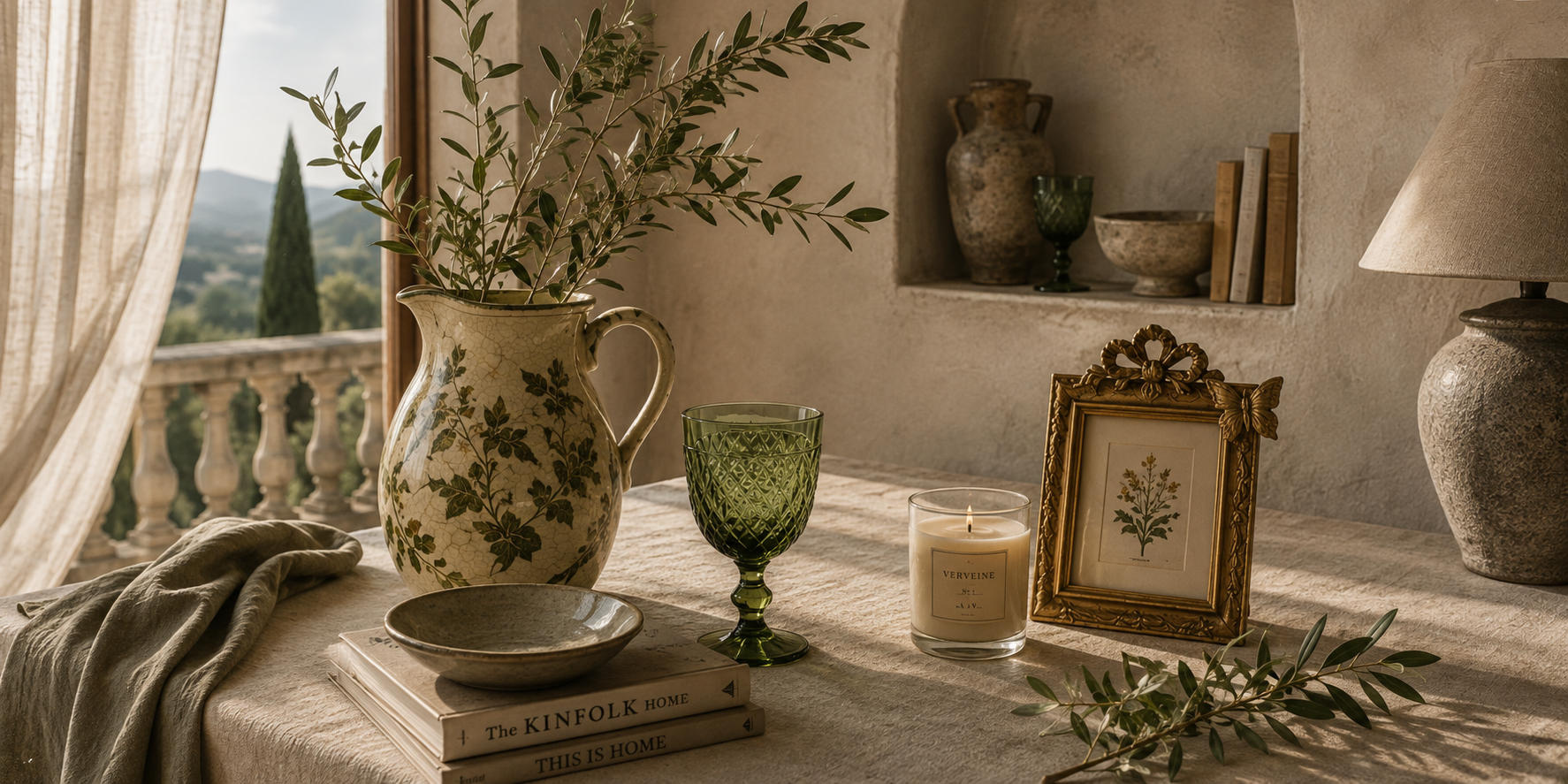
Quiet luxury begins with materials you want to touch. Washed linen, warm wood, softly glazed ceramics, woven fibres, stone and textured glass bring depth to a room without demanding attention. Their beauty comes from subtle variations rather than perfectly polished surfaces.
Natural materials also become more interesting with time. Linen softens, wood develops character and handmade-looking ceramics reveal small irregularities that make each piece feel individual. Instead of filling a room with decoration, begin with a few materials that create warmth on their own. Often, texture can do more for an interior than another decorative object.
02
Let craftsmanship do the talking
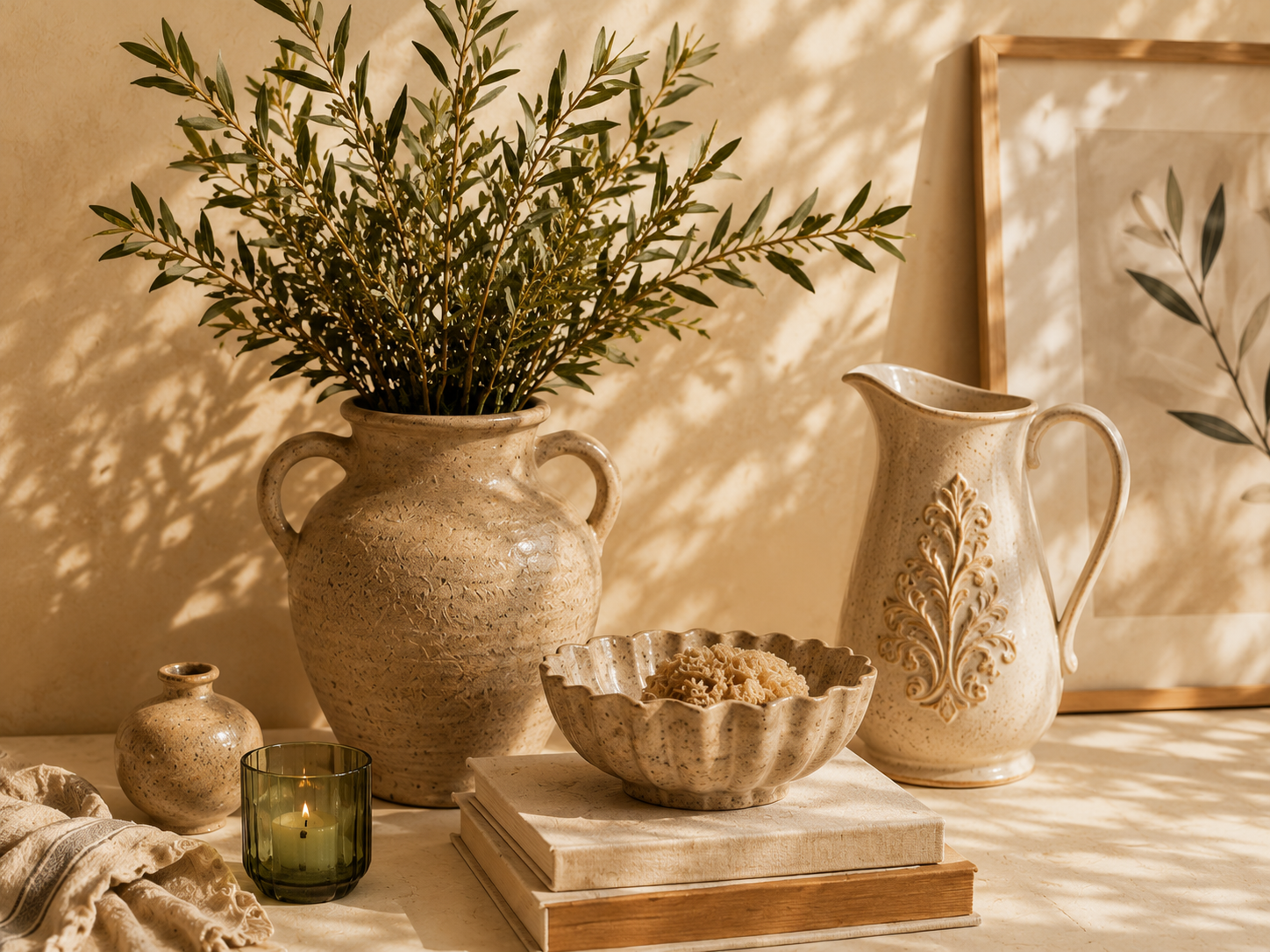
The most memorable objects rarely need to announce themselves. A beautifully shaped handle, an embroidered edge, a delicate botanical motif or an unusual glaze can give an everyday object presence. These are details you may not notice immediately, but they are often what makes a piece worth keeping.
This is where choosing fewer, more distinctive objects makes a difference. A ceramic pitcher can be both useful and decorative, while a beautifully finished bowl can sit comfortably on an open shelf even when it is empty. Quiet luxury is not about surrounding yourself with expensive things. It is about noticing when something has been made with care.
03
Use colour with restraint
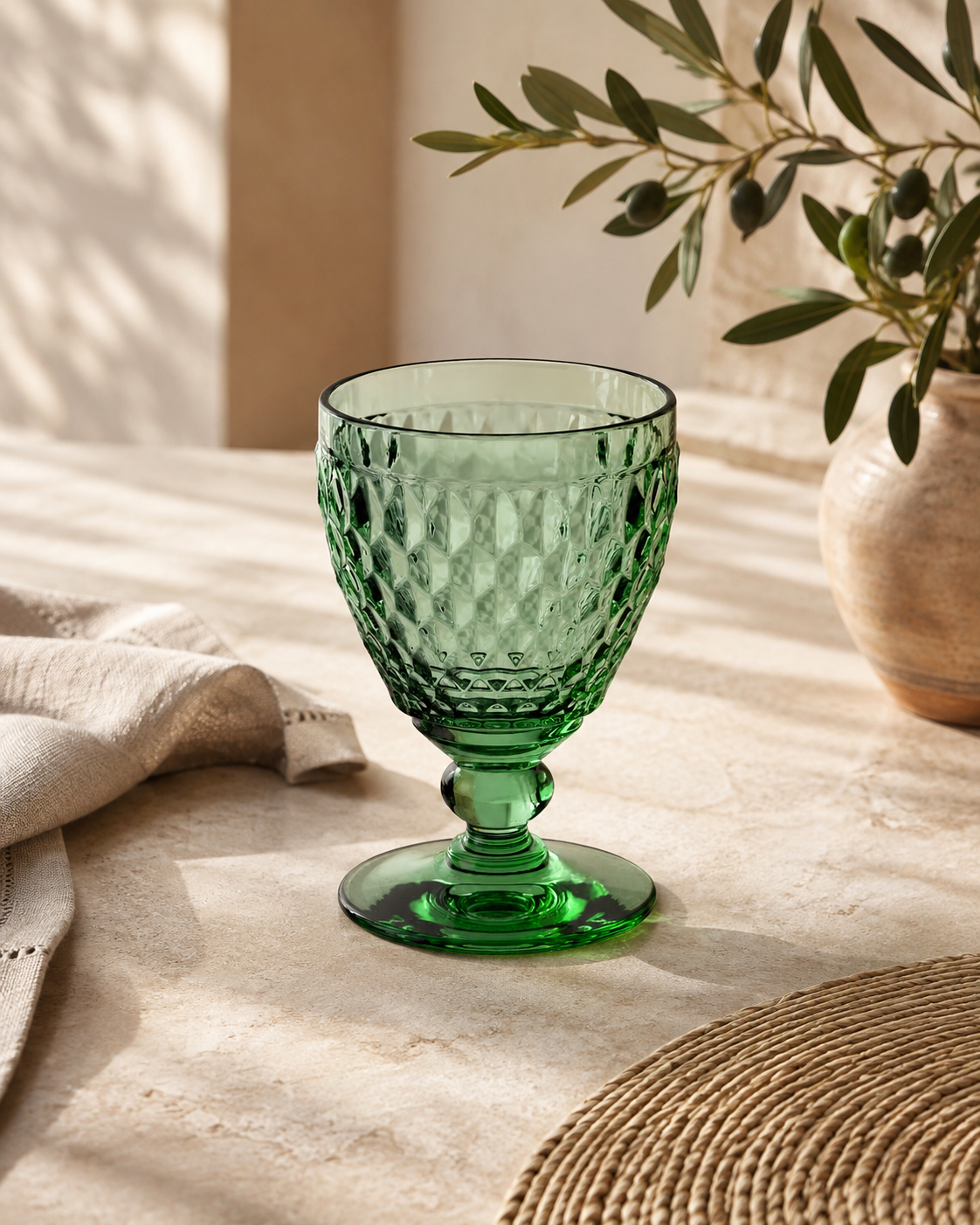
Quiet does not have to mean beige. Deep green glass, dusty blue ceramics, muted ochre, warm ivory and soft tobacco tones can bring personality into a room while still feeling sophisticated and calm.
The key is repetition rather than abundance. Choose one or two colours and allow them to appear gently throughout the space — perhaps in a glass, a cushion, a painted detail or a piece of pottery. Against natural materials and a calm background, even a small amount of colour becomes more expressive. A single green glass catching afternoon light can sometimes contribute more to a room than an entire collection of matching accessories.
04
Mix old and new
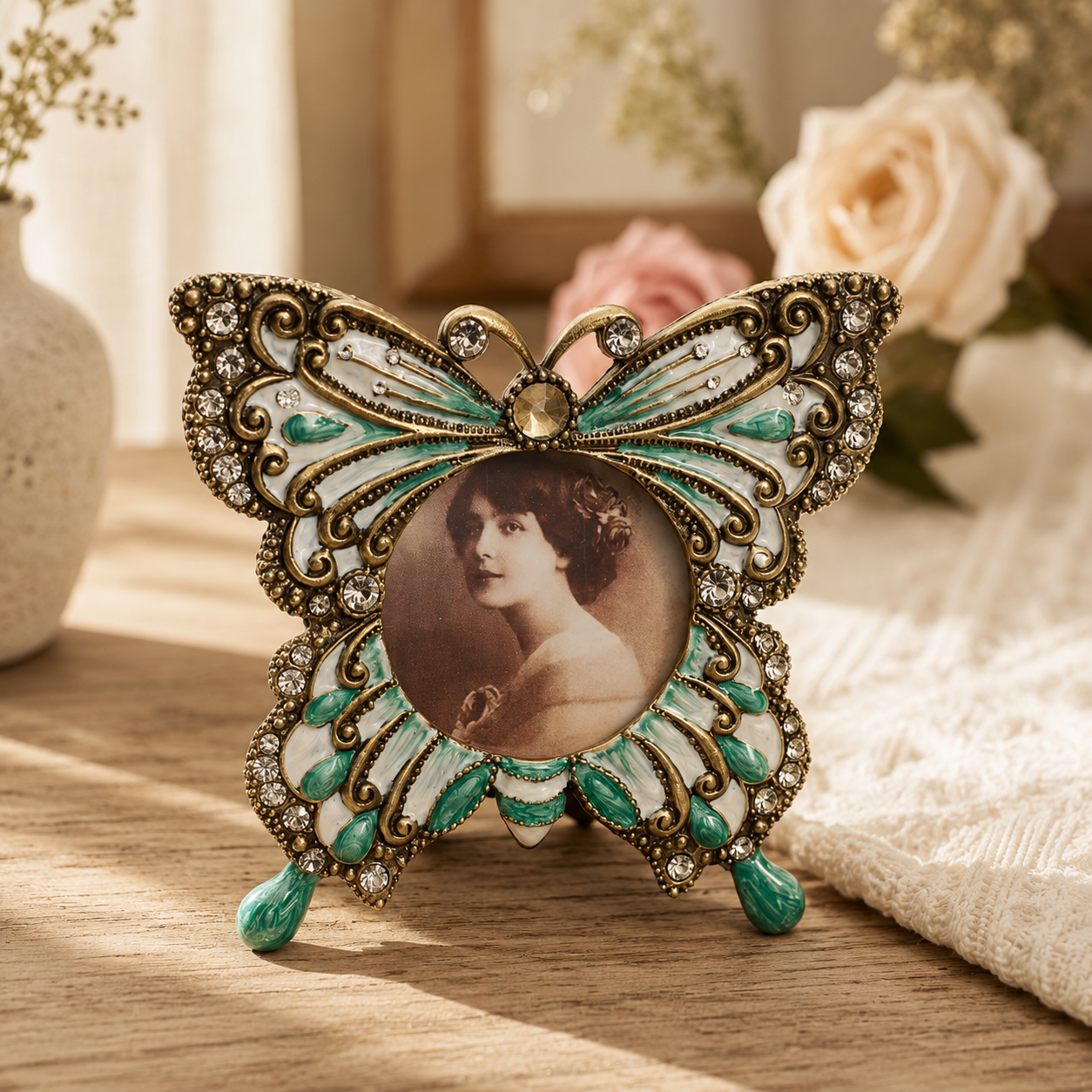
Rooms with character rarely look as though everything arrived on the same day. A vintage-inspired frame beside a contemporary object, an aged wooden surface beneath modern ceramics or a botanical piece placed on a simple console creates a sense of history and makes an interior feel more personal.
The goal is not to recreate a particular period. It is to avoid making a home feel overly coordinated. Allow different finishes, shapes and influences to coexist. When there is a common thread of colour, material or mood, pieces from different styles can feel surprisingly natural together. A home becomes more interesting when it looks collected over time.
05
Make comfort part of the design
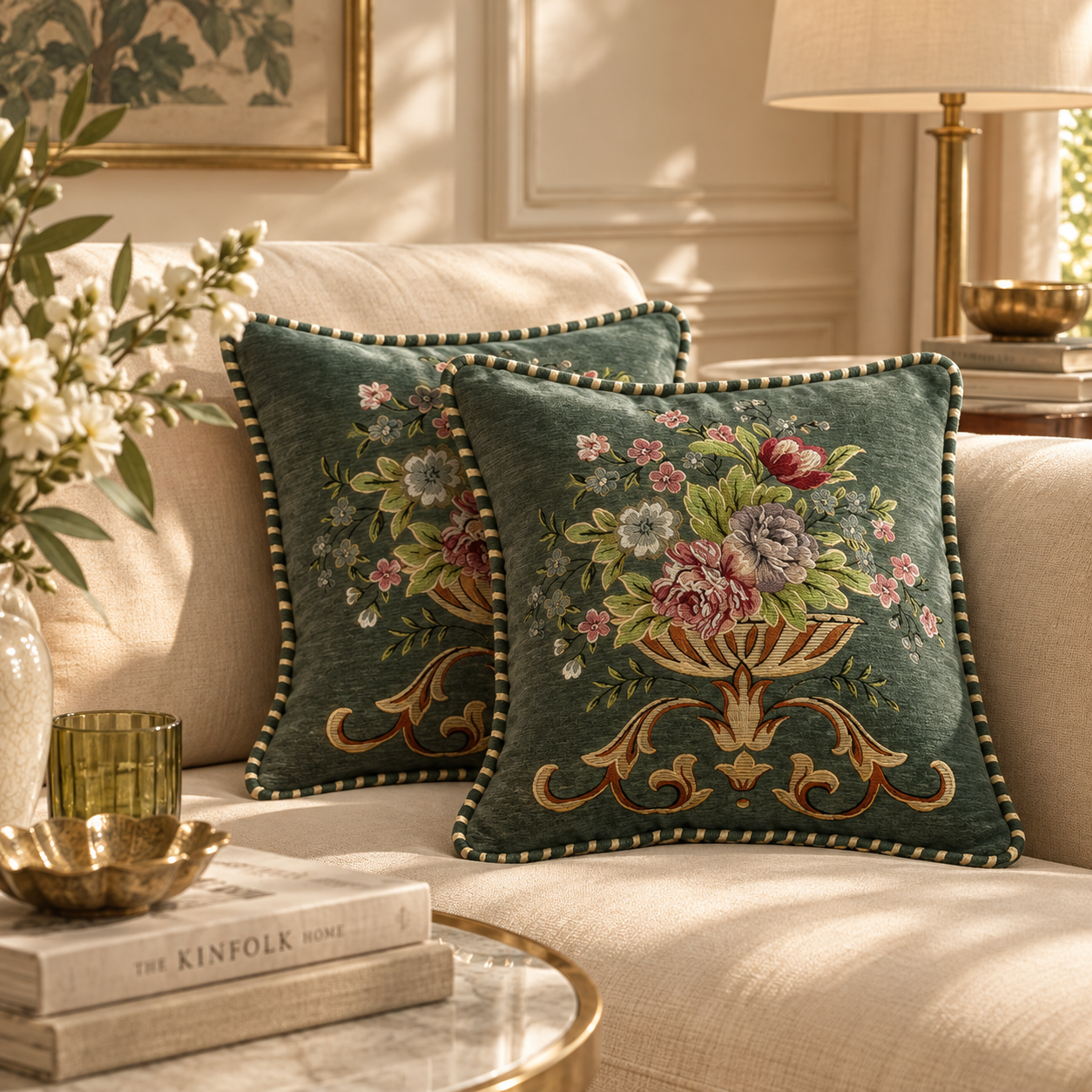
A beautiful room should invite you to use it. Cushions should be comfortable enough to lean against, throws should be within reach and lighting should become softer in the evening. Linen does not need to remain perfectly pressed. These small signs of everyday life prevent an elegant interior from becoming too formal.
Layer embroidered or patterned cushions with quieter textiles, add a throw to the arm of a chair and let curtains move with the breeze rather than arranging everything perfectly. Comfort is not separate from good design. In the most successful rooms, it is part of what makes the space beautiful.
KASODI EDIT
Pieces for the Look
Three thoughtful finds that bring texture, colour and quiet character to a collected interior.
THE KASODI APPROACH
Choose fewer things,
but choose them with attention.
Look for beautiful materials, thoughtful details and objects that can remain part of your home long after a trend has passed.