TABLE & ENTERTAINING
How to Create a
Mediterranean Table
A relaxed Mediterranean table is built from warmth, texture, natural materials and a few carefully chosen details.
01
Start with natural materials
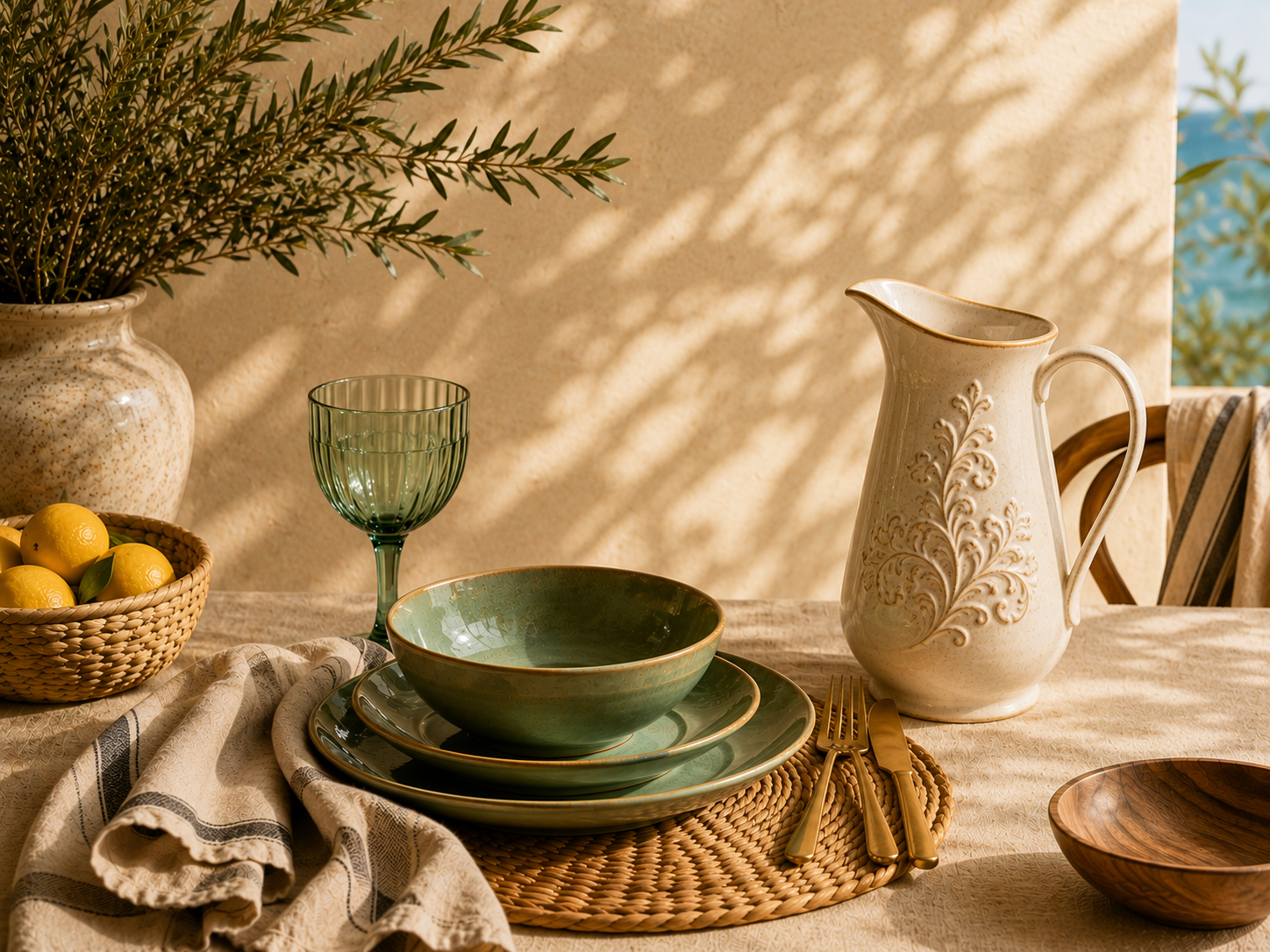
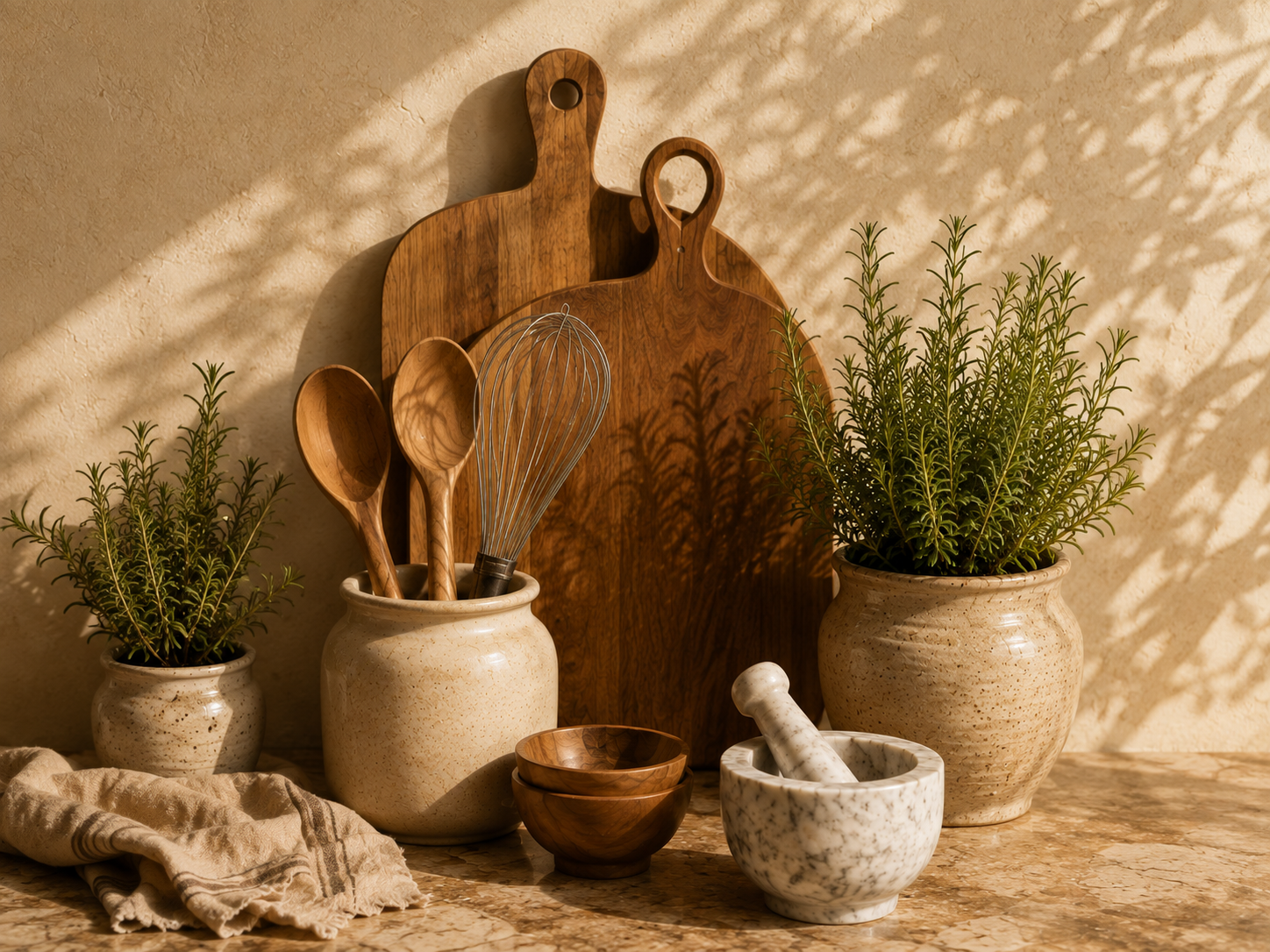
The Mediterranean look begins with materials that feel relaxed and tactile. Linen, woven fibres, wood, stone and ceramics create warmth before anything decorative is added. Their natural textures catch the light differently throughout the day and give even a very simple table a sense of depth.
Instead of a perfectly pressed formal tablecloth, try a textured linen runner, woven placemats or even a bare wooden surface. Mix smooth ceramics with slightly imperfect handmade finishes and let the materials speak for themselves. The goal is softness and character, not perfection.
02
Layer ceramics instead of matching everything
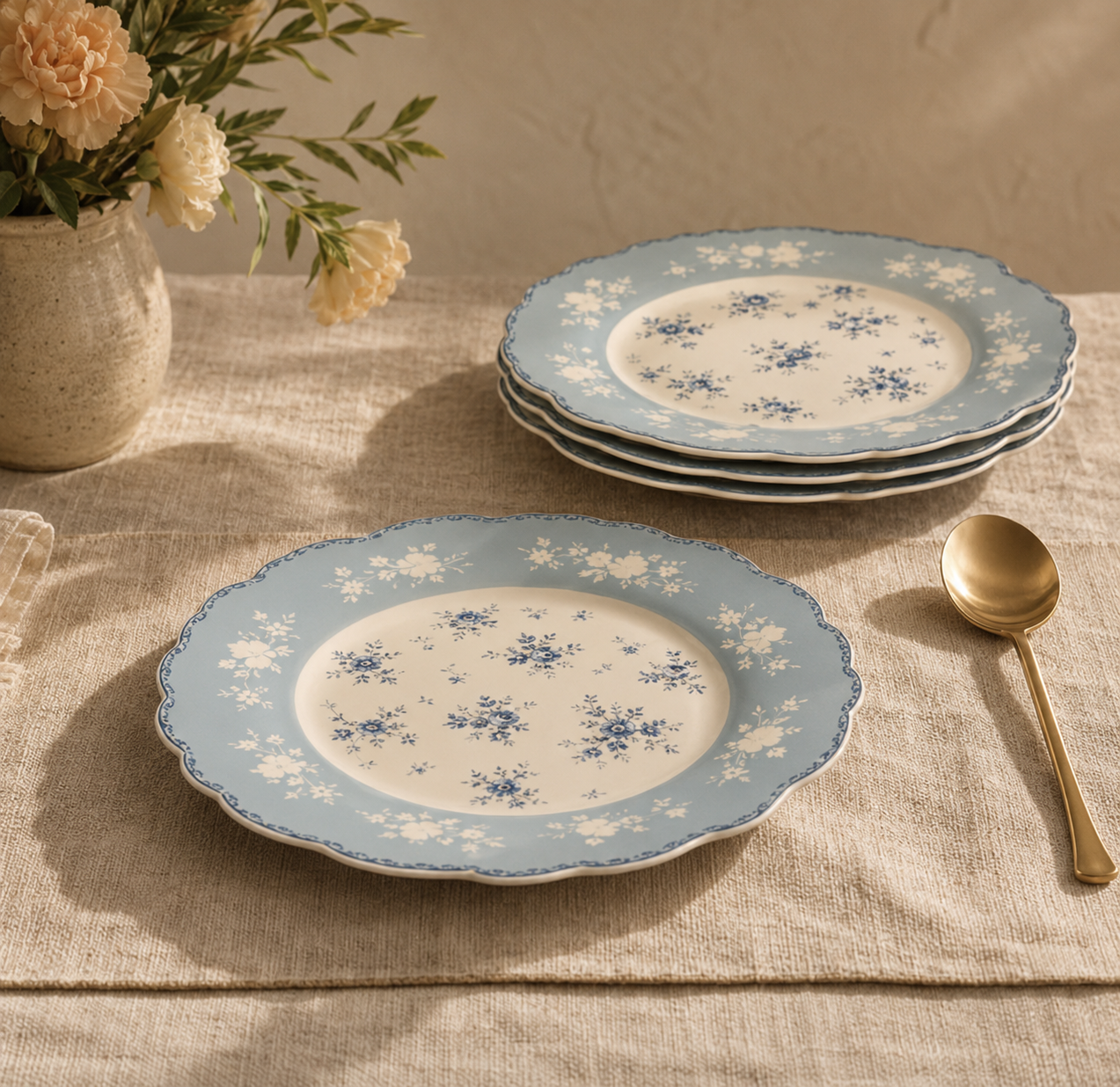
A Mediterranean table feels more personal when every piece does not come from the same set. Combining different shapes, patterns and subtle variations in colour creates the feeling of a table collected gradually over time rather than arranged straight from a catalogue.
Pair softly coloured dinner plates with patterned dessert plates, handmade-looking bowls or serving pieces with visible texture. Look for one or two colours that appear quietly across several pieces — perhaps blue, sage green or warm ivory. That small repetition is enough to make an eclectic table feel intentional and beautifully connected.
03
Add coloured glass
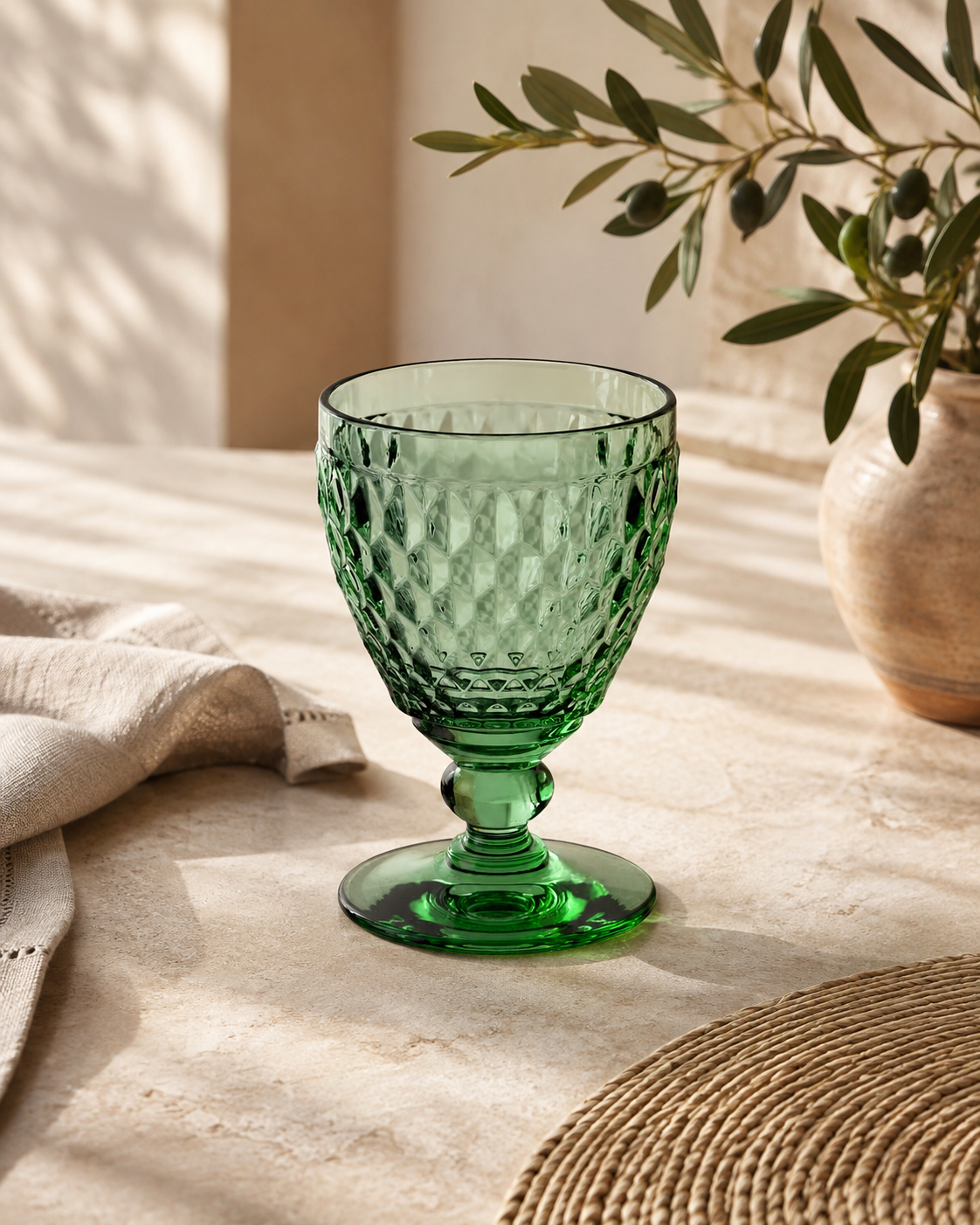
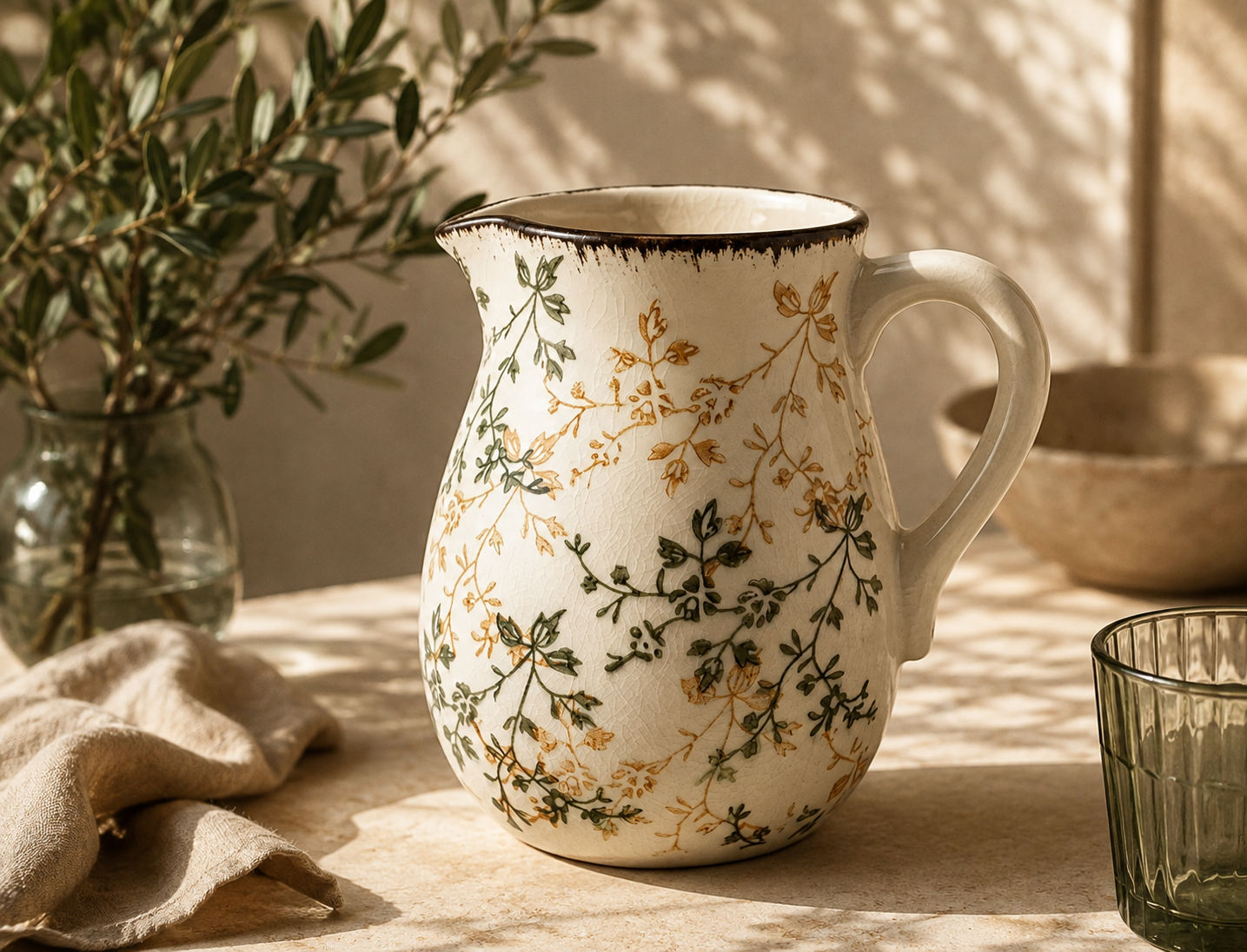
Coloured glassware can transform a simple table with almost no effort. Green, amber and smoky shades catch natural light beautifully and add another layer of colour without making the setting feel overly styled. They work especially well beside warm ceramics, natural linen and the soft neutral tones typical of Mediterranean interiors.
You do not need a full matching set. One distinctive glass at each place setting can be enough to change the mood of the entire table. Choose a textured or softly coloured design that feels special in the hand — the kind of small detail guests notice when they sit down.
04
Bring in something botanical
A centrepiece does not need to be elaborate. Olive branches, fresh herbs, garden flowers or a few leafy stems bring movement and life to the table without making it feel formal. Choose something loose and slightly irregular rather than a perfectly arranged bouquet — it feels much more at home in a relaxed Mediterranean setting.
The vessel matters too. A ceramic pitcher, aged jug or simple handmade vase can become part of the composition rather than merely holding the flowers. Keep the arrangement low enough for conversation to flow easily across the table and allow a few stems to fall naturally instead of arranging everything too precisely.
05
Let the table feel lived in
The final step is not another object. It is knowing when to stop. Leave linen slightly relaxed, allow serving pieces to become part of the composition and resist the urge to make every detail perfectly symmetrical. A little imperfection is often what makes a table feel inviting rather than staged.
Think about how the table will actually be used: bread being passed, glasses moved, serving bowls shared and flowers shifting as people settle in. A beautiful table should feel ready for people, food and conversation — not just a photograph. That sense of ease is ultimately what gives a Mediterranean table its charm.
KASODI EDIT
Pieces for the Look
Three finds that bring colour, texture and character to a relaxed Mediterranean table.
THE KASODI APPROACH
Create a table that feels collected, not decorated.
Choose fewer pieces, notice texture and colour, and allow the setting to feel personal rather than perfectly coordinated.